Cloudflare released Drop today. It’s a simple way of creating a static website by “dropping” your HTML and CSS files into a folder and seeing it go live instantly.
Interesting and fun idea, but it’s the modern equivalent of build a blog in 15 minutes. Impressive, but ultimately not much use to anyone in its current form. It’s purely a marketing exercise (working!), and probably generated by the summer interns and Claude. As a founder of a blogging platform, I shouldn’t be quaking in my Vejas just yet.
What’s not fun about it are the terms and conditions:
By submitting, posting, or publishing your content, suggestions, enhancement requests, recommendations, feedback, information, data, or comments (“Content”) to any Website or Online Service, you are granting Cloudflare a perpetual, irrevocable, worldwide, non-exclusive, royalty-free right and license (with the right to sublicense) to use, incorporate, exploit, display, perform, reproduce, distribute, and prepare derivative works of your Content.
Rather OTT don’t you think? I’m hoping it’s just because they have a battlement of lawyers who demanded this sort of nonsense (see also: Meta), but as a fan (yes, they do amazing things!) and a paying Cloudflare customer, it certainly erodes trust.
A lot of the indie blogging community are privacy-conscious and anti-big tech, so this sort of nonsense will tar Cloudflare (good Internet citizens that they are, imo), and perhaps by association the likes of Pagecord and Bear blog who use their services. It’s a shame, but it is what it is. I’m not beholden to Cloudflare, but they make my life easier and I don’t have the headspace to consider a migration elsewhere unless there’s a monumental reason to do so.
I’m hoping this negativity gets picked up and commented on by Cloudflare themselves (it’s hot on Hacker News today). I’m interested in their take. As custodians of a huge part of internet infrastructure, they need us to have conviction in their actions, but for me this has been a small but noticeable depletion in the trust battery.
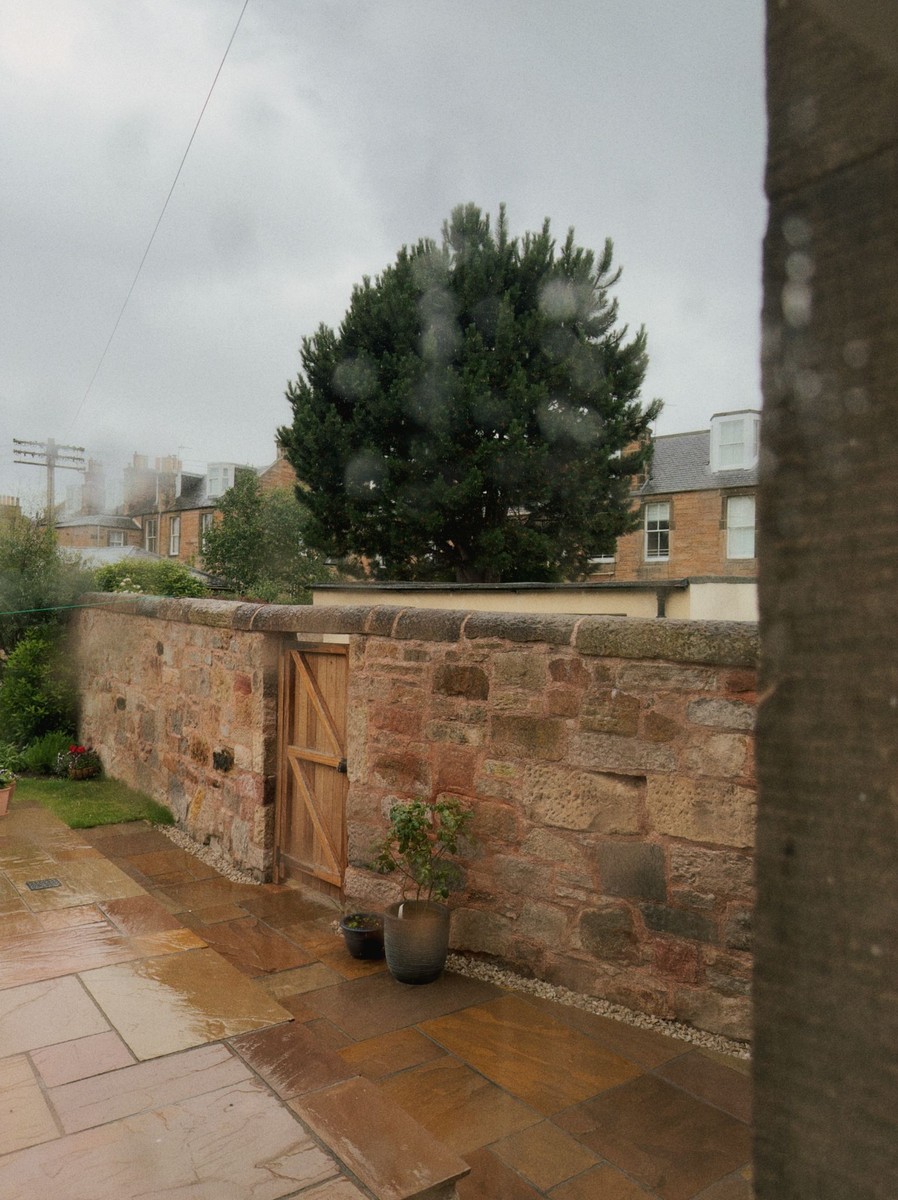
I am so done with the Scottish "summer". The rest of the UK has been baking in perfect weather for weeks, Scotland has had a couple of days of warm-ish sunshine, and I'm in the south east of the country – the good bit, weather wise. It's like this every year, and this is my 16th year. It's astonishing what a difference 250 miles makes. Apparently climate change will only exacerbate this, dammit.
We're already 2 weeks past the summer solstice, so the march towards shorter days and longer nights has already begun. It's a wonderful country in many ways, but I can't hang around and suffer the abysmal climate all year, every year much longer. It's insufferable. I'm starting to feel it in my bones.
No idea if this can or will pan out, but the idea of spending big chunks of time somewhere else each year is fast becoming life priority number one, and it's giving me hope. Spain is appealing because of the language (although parts of it have different weather problems right now, I guess), but then so is south east Asia (Thailand, Vietnam, Philippines). Asian winters, Spanish springs, back in Edinburgh for the festival season... sounds wonderful, and I'm feeling better already!
Where else should I consider? Help me feed my dreams.
Inspired by Martin, here are "five albums that shaped me", not to be confused with "my five favourite albums ever", IYSWIM. That said, without question, Disintegration is my favourite album of all time.
I'm been chewing on the idea of getting a new laptop. My current MacBook Pro is not exactly sluggish – it has 32GB RAM and the M1 Max processor – but it does chug a little with Lightroom, has 2TB storage which isn't quite enough, plus it would be a great upgrade for one of my kids. So after 5 years I think an upgrade might be in order.
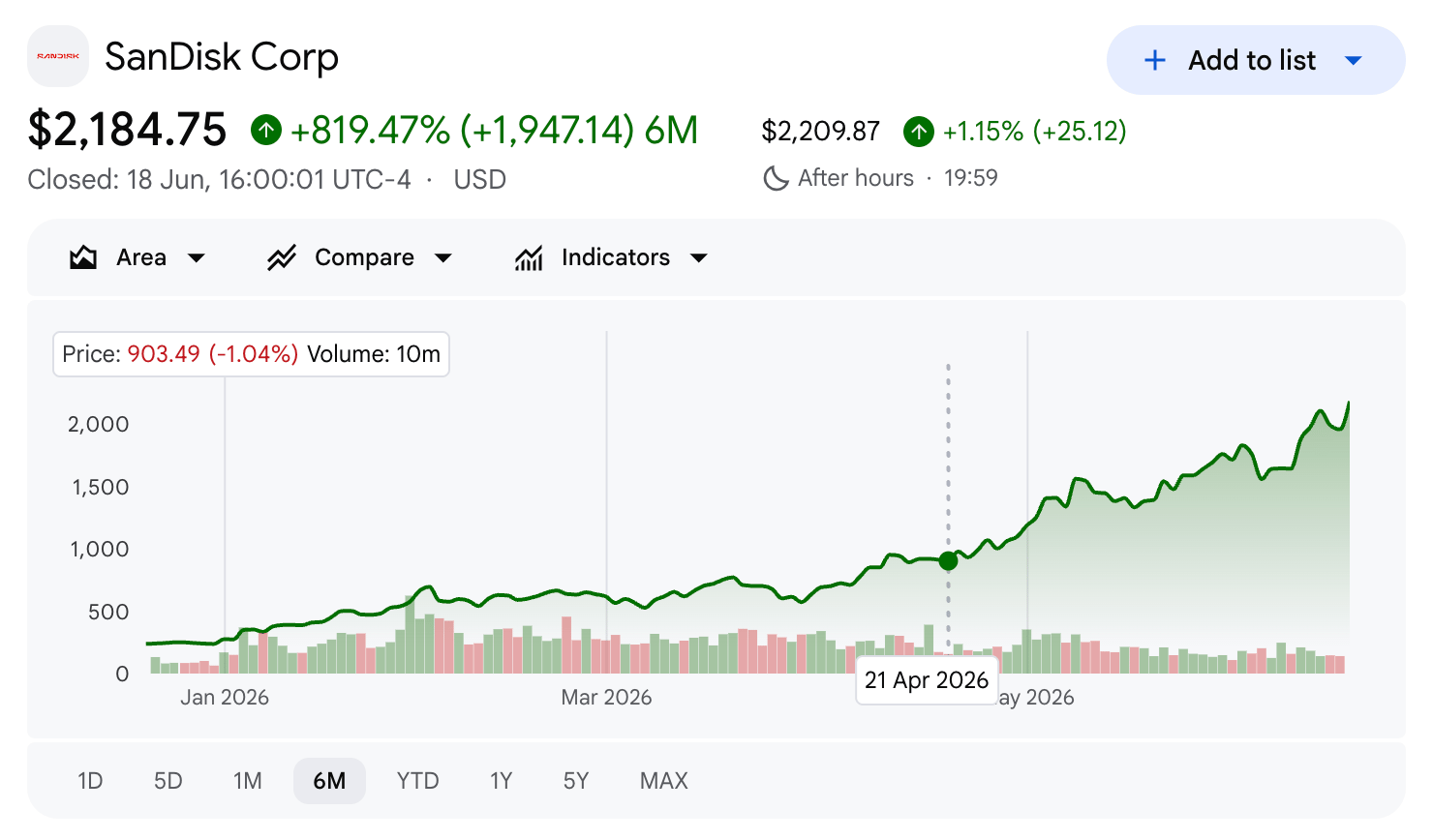
Trouble is, laptop prices have skyrocketed because the AI companies are hoovering up all the RAM, so there's a shortage which is being called a RAMpocalypse. You should have bought Sandisk stock last year, for sure.
Sandisk stock has risen nearly 10x in the last 6 months
Things are expensive right now, but there's little sign that prices are going to drop. Tim Cook warned of price hikes this week. There are glimmers of hope that AI demand might slow, but most analysts seem to think high prices are here for another year or two yet. And even if/when production ramps up, do you really think the prices will be slashed?
Hence me thinking that upgrading now might not be such a bad idea, rather than waiting a year or two. But what should I upgrade to?
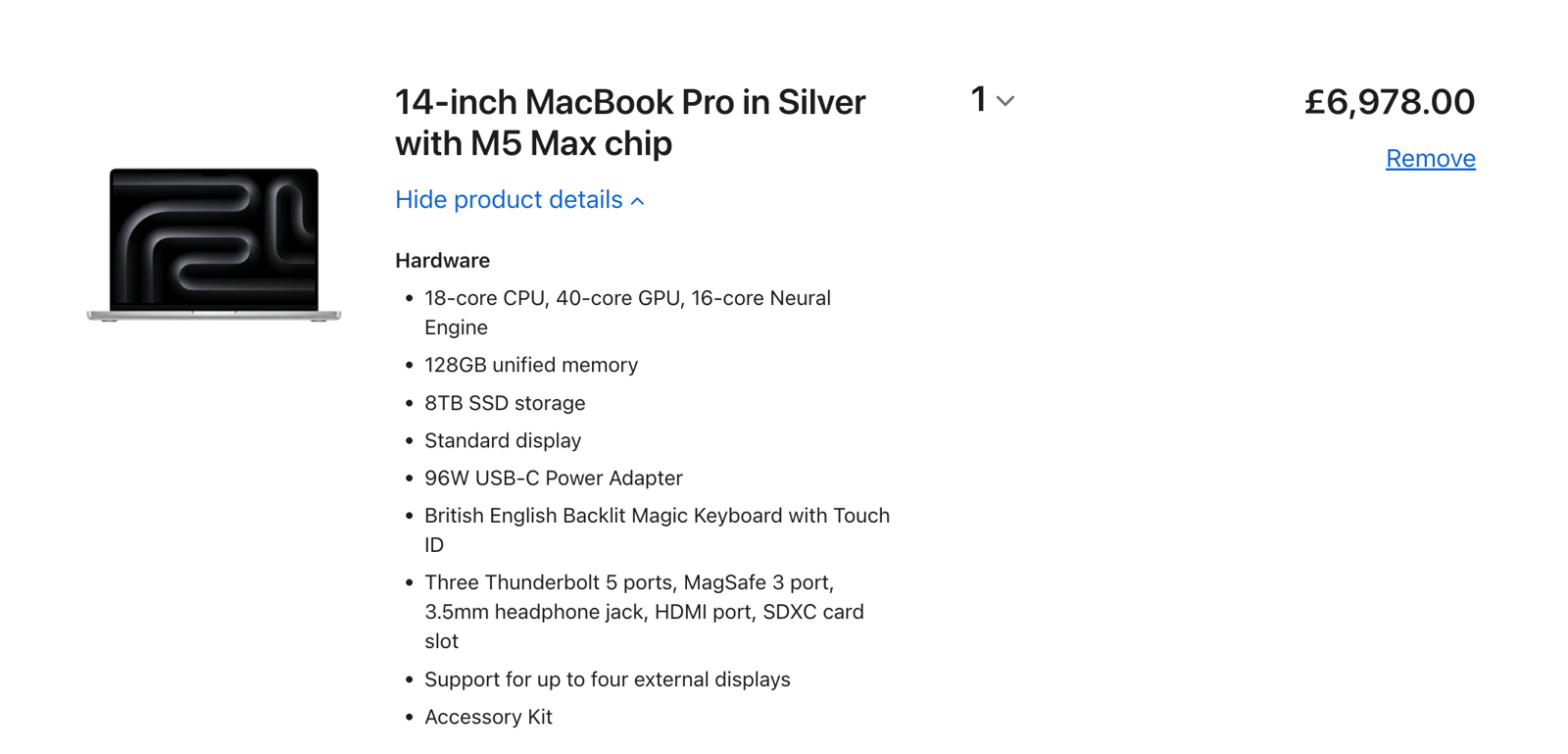
When buying a computer, I try to buy to cover my needs for the next 5 years or so. You should buy the most pimped machine you can afford, basically, and try not to scrimp. I'm still a fan of the Mac, despite there being a growing number of haters in the dev community. macOS just works for me, for both dev as well as for all my photography, and I love the hardware so I configured a new MacBook and maxxed it out. Are you sitting down?
Currently the best 14-inch MacBook Pro you can buy. Total beast.
Top-of-the-line, bleeding edge tech is never cheap, and an M5 Max with 40-core GPU, 128GB RAM and 8TB hard drive is wildly powerful. I don't think this is an entirely unreasonable purchase, since my photos take up vast amounts of storage and that processing power and memory will open up a fascinating world of local AI models for software development. But seven grand is a massive outlay, no question. Kinda ridiculous, even.
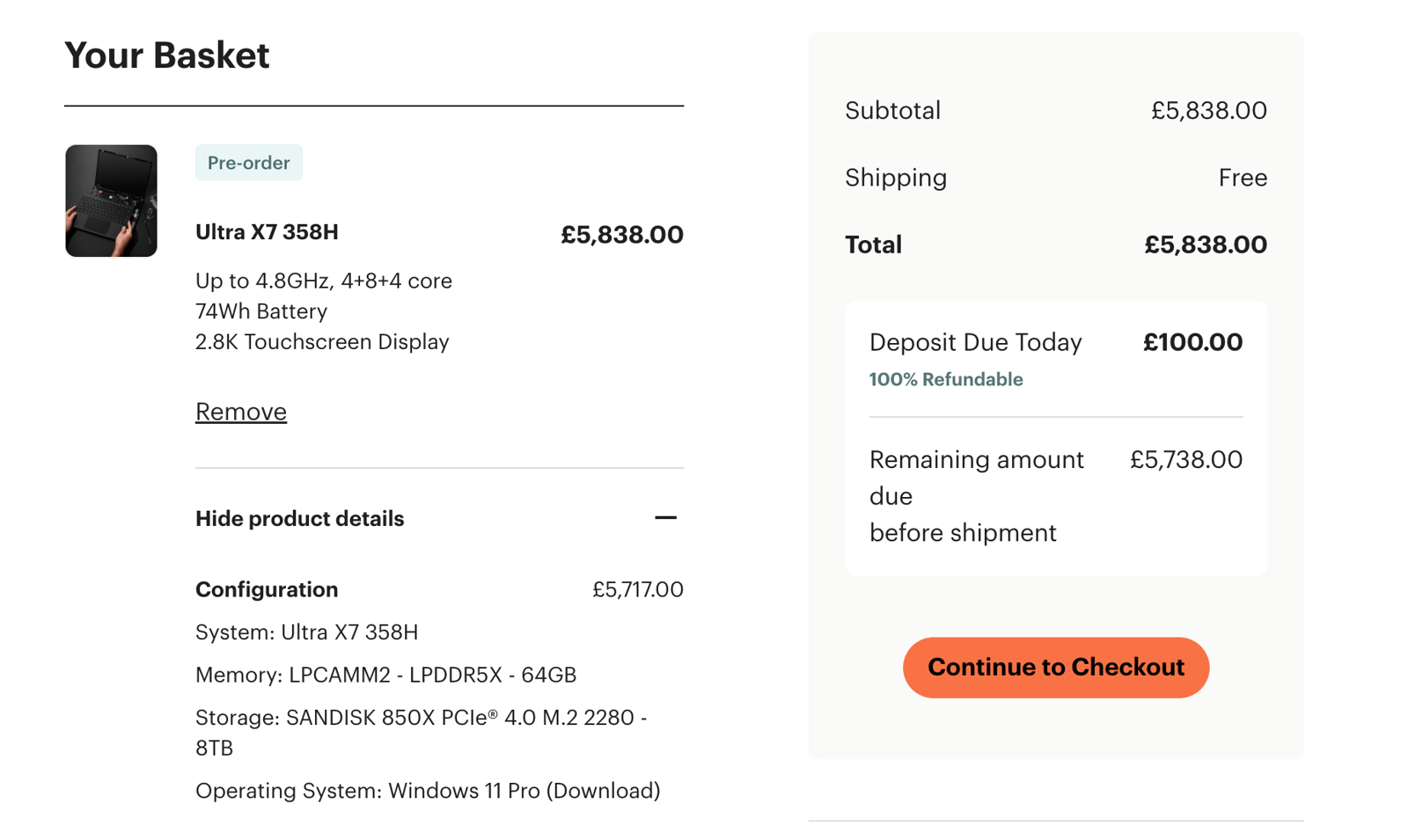
The Linux community has been raving about Framework computers recently, and I love the idea of an upgradable computer for sure, so I thought I'd check it out. My Lightroom addiction means Linux is out of the question (unless Adobe start to offer native Linux apps, yeah right, or I try and use some emulation hacks, or just ditch it for Rapid Raw), but I could, perhaps, move to Windows. This fills me with dread to be honest (I just don't get on with Windows – I love Unix too much), but I am Framework-curious so I configured their 13 Pro laptop to see what the damage would be.
Framework 13 Pro, maxxed out
This is £1000 cheaper, but that's for half the RAM of the Mac. It's not as powerful as the Mac option, with "only" 64GB RAM and an Ultra X7 358H processor (there's a more powerful Ultra X9 388H but this isn't available right now), and it's 13" not 14". The M5 Max is more powerful, but ChatGPT suggests that "it might be overkill unless you genuinely need Max-tier GPU, 64–128GB memory, video/media horsepower, or you keep machines for years."
Side by side, the Mac doesn't actually seem that expensive, relatively speaking. But is it actually too much compute? If I plan to run large AI models locally, I might be able to justify it, but I can't say with any conviction that I will actually do that. I'm happy paying for frontiers given my usage.
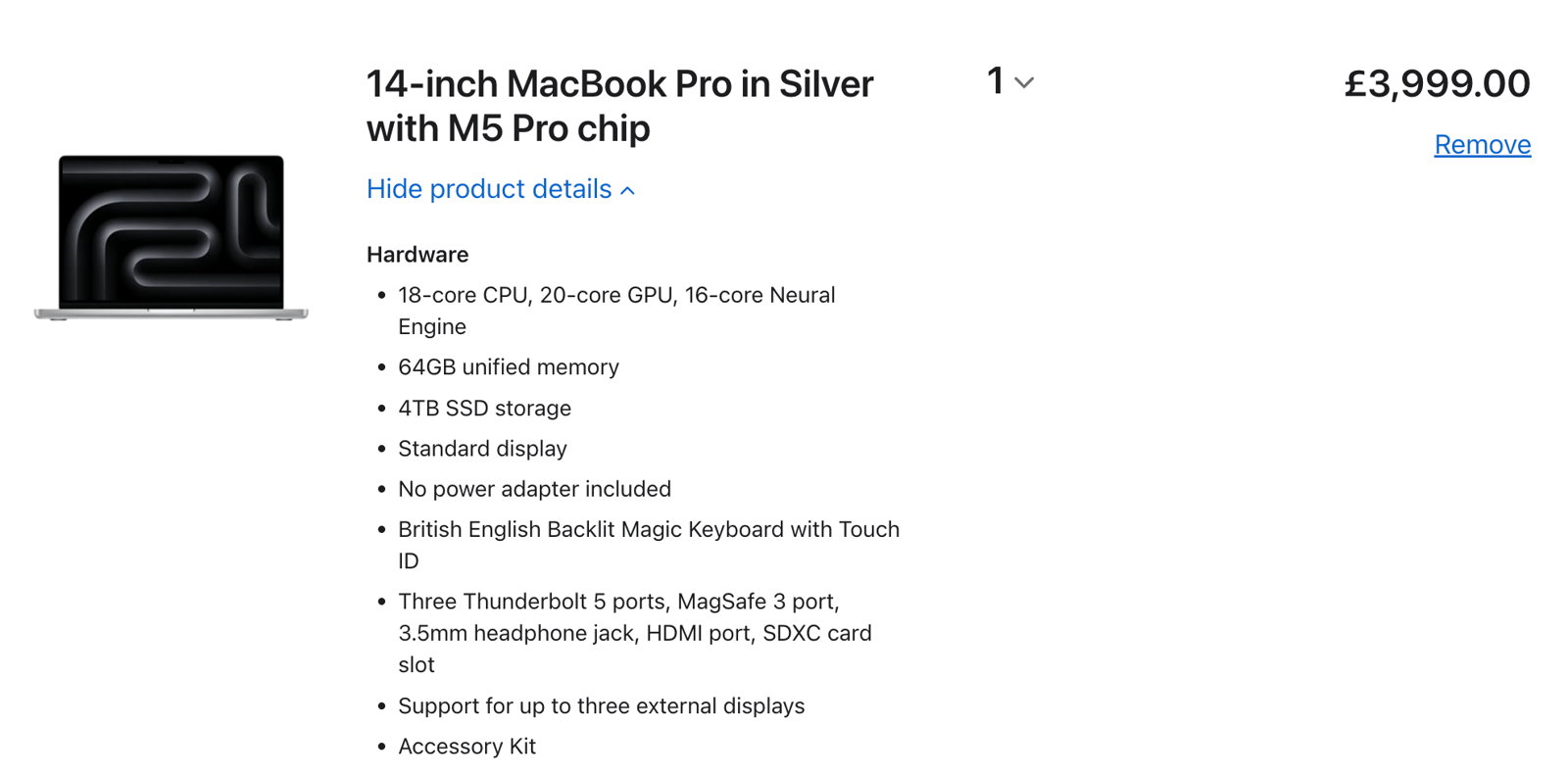
I can drastically reduce the cost by configuring a MacBook Pro with a lowly (!) M5 Pro, 64GB RAM and a 4TB hard drive. This brings it to £3,999 – a saving of £2,979! I'd love 8TB of storage, but that's not an option with the M5 Pro for some reason. 4TB is definitely enough for the next 2-3 years anyway, and it'll be cheaper to buy my own 8TB external SSD if and when the time comes.
A very capable, probably more sensible laptop for my needs
Four grand is still a lot to shell out, but it doesn't seem that crazy. My current laptop cost £3,599 in 2021, and I'd certainly benefit from the increased spec, so given that the CEO says prices are going to increase, I think it makes sense to bite the bullet and sit comfortable for the next 5-6 years at least.
What do you think?
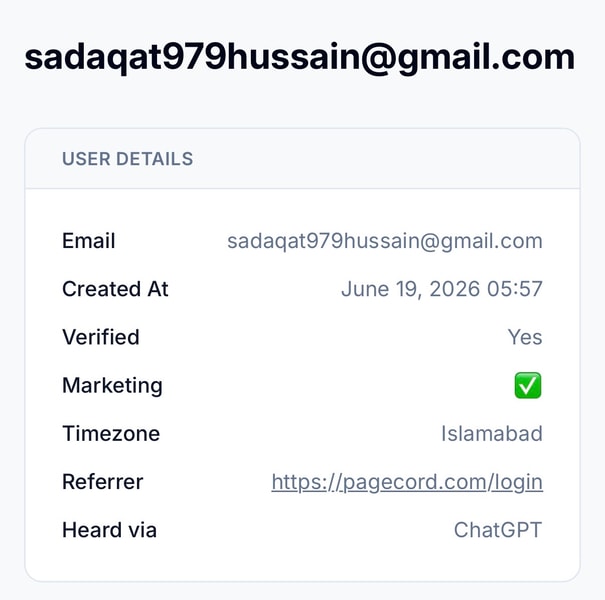
The plague of offering a free website/blog platform is the spammers. They’re relentless. I’ve largely automated spam detection now, but it’s eye-rolling to see them keep trying, day-in, day-out. Here’s a prime example.
I've been updating the Pagecord home page today with a new headline, refreshed hero text, and a new section called The Pagecord Principles.
The idea is to encapsulate why Pagecord exists and what it stands for. I'm hoping this resonates with bloggers visiting for the first time, encouraging them to sign up to Pagecord rather than (or as well as) one of the many, many alternatives.
It's not a political standpoint or a side-swipe at the competition, just a set of founding principles that guide the development and evolution of the product.
I think it brings more purpose. What do you think?
Write more, manage less
Pagecord reduces the ceremony around blogging. Publish what you like, when you like, from wherever you like. A single photograph, a quick thought, a full-on essay. Everything looks great. Don't let overthinking hold you back – write and publish whenever you feel the urge.
Use your favourite writing tool
Pagecord lets you use the writing tools you already love. Use the fantastic web editor, post by sending an email, publish from Obsidian, or publish from the terminal using the CLI or API.
Own your home on the web
Pagecord gives writers a long-term home on the web. Bring your own domain name, create your own design. Export your entire site, including images, any time in HTML or Markdown format. No lock-in. Easy to leave, but worth staying for.
Embrace boring web standards
Pagecord embraces the original dream of the World Wide Web. Fast, lean, semantic HTML that looks great on every device. Tiny JavaScript sprinkles, evergreen permalinks, RSS, and email. No bloat, no adverts. Built for the long haul using tried and trusted tech.
Allow people to follow, calmly
Reading a Pagecord blog should be as effortless as writing on one. Every Pagecord blog comes with RSS support. Premium lets readers subscribe to weekly email digests, or individual posts by email. Readers can also reply privately to posts using email.
Complete, not complicated
Pagecord includes posts, pages, themes, analytics, email subscribers, custom domains, and full export. Everything you could reasonably need, for a most reasonable price.
I love that Pagecord is open source but it's a double-edged sword because I see features being copied all the time. I don't read competitor blogs, but sometimes I come across things. I guess it's not a big deal given the arrival of coding LLMs – anyone can build anything at any time, right? – plus I've certainly been inspired by other products. Yet, people can literally see my work in progress and copy the product, and there's FA I can do about it. I have no IP moat.
It doesn't bother me too much (just a little!) and it just means I have to make everything that is Pagecord but isn't the product better than anyone else can match. Customer support, community, brand, trust, performance. That sort of thing. Anything else? How do you think it's going and what could be improved?
Biggest IPO of all time and Musk’s speech is a 5 sentence sci-fi B movie word salad that literally makes no sense. That’s all you got?
I always think about this. There are always problems on earth. There’s always things that we wish to be better, that we want to solve here on Earth, and we should solve them. But there also have to be things that get you excited about the future - that make you glad to wake up in the morning, because you can’t wait to see what happens next. And that’s the future SpaceX wants to bring to you.
I’ve published a small Pagecord command line app (CLI) for people who want to write on their local machine in Markdown (or HTML) and publish those files to Pagecord. If you use Obsidian, you should use the dedicated plugin, but if you use something else then the CLI app might be able to help.
The app is written in Ruby (❤️), and you install it from RubyGems:
gem install pagecord-cli
Once installed, you can log in using the login command and passing your blog subdomain:
pagecord login blog-subdomain
This will ask for your API key, which will be used to authenticate you.
Once you're logged in, you can save posts to your blog as draft or published using the draft and publish commands:
# subdomain is only required if you're logged into two or more blogs
pagecord draft post.md [subdomain]
pagecord publish post.md [subdomain]
If you want to move a published post back to draft, use the draft command.
Images
Images are supported as with the Obsidian plugin. Just reference the local file in your Markdown and it will be uploaded to Pagecord.
After syncing a file (draft or published), you'll notice some frontmatter entries appear such as pagecord_token, pagecord_blog_fingerprint, and pagecord_attachments – these are required by the app to identify the blog post and attachments in Pagecord, so please don't edit them.
Options
Frontmatter in your Markdown file is supported as per the Obsidian plugin, but if you prefer you can use CLI options to configure the post.
Note: The CLI app and Obsidian plugin use the same Pagecord frontmatter, so you can move between them. A post first published from the CLI can later be edited and synced from Obsidian, and a note first published from Obsidian can later be updated from the CLI.
Setting the title (or no title)
# by default the title is set to be the same as the file name
--title "Custom title"
--title ""
Changing the post slug
--slug my-new-post-slug
Changing the publication time
--published-at 2026-06-11
Adding tags
--tags ruby,cli
Add canonical URL
--canonical-url https://example.com/original
Making the post hidden
--hidden
Changing the post locale
--locale en
The CLI app covers the main workflows. If you want to delete a post, you'll need to head into the Pagecord UI.
Hopefully this app opens up options for people who want to write locally in other editors like iA Writer, Vim or Emacs, or do some automation, but who don't want to fiddle with the Pagecord API itself.
Composing your blog posts locally on your own device is a great way to use Pagecord. You can export your data from Pagecord at any time of course, but writing locally means you own all your content from the outset. Your posts are just files that you can back up, store on Dropbox, whatever you like!
This is how I write most blog posts now, and I've published this one using the CLI app itself.
I’ve managed to stay away from macOS 26 (Tahoe) and it looks like macOS 27 (Golden Gate) might be safe to upgrade to. Apple appears to have listened to the Liquid Glass horror stories and fixed many (most?) of them.
There’s no chance of me installing a developer or public beta, but come 27.1 I’ll probably give it a go. Assuming it supports a five year old M1 MacBook Pro that is.
I first thought about the next chunky Pagecord feature 148 days ago, according to the Fizzy card I created (I use Fizzy to track all my Pagecord work). I put up the first PR 32 days after that, and I got it production ready today, 4 months later.
The feature didn't take 5 months of me grinding at the keyboard every day. Far from it. In the agentic coding era it has probably taken only a few hours of prompting and LLM munching over that time. At most, a couple of day's work in total.
What's interesting to me about this isn't the flex of building a feature quickly without hand-cranking much/any code (that's still fascinating, for sure), but rather that it's still worth taking your time to let a feature sit and evolve a little before shoving it out the door. Not only will this help you find a few more bugs and edge cases, but you'll have more time to think about the implementation and whether you truly need it – could it be done more simply, is the additional complexity worth the cost, is now the right time, and what's the opportunity cost of not doing it? Time might change your mind.
You can put some things out there without much consideration or hesitation, but for the chunkier changes, my advice would be to live with it for a while. Let it sit and simmer, stirring only occasionally. Things often taste better when they've developed more flavour.